
How Much Do Fleet Wraps Cost? Per-Vehicle Pricing, Timeline and Keeping Your Brand Consistent
Fleet wraps start from $3,500 per vehicle. See van, truck, box truck and trailer pricing, install times from 4 hours, and how we wrapped 100+ Greenwood Heating vehicles in two months.
On this page
Quick answer: Fleet wraps at Ardor Printing start from $3,500 per vehicle, van wraps from $3,900 and truck wraps from $4,000, with fleet pricing when you brand several vehicles. Design and printing happen before install day: a full wrap on a Ford Transit can be installed in as little as 4 hours, and larger vehicles or full coverage take one to a few days each. We install in batches so most of your fleet stays on the road, and we wrapped Greenwood Heating's 100+ vehicles in two months. The key to a good fleet is a design system that keeps your logo, colors and contact info consistent on every vehicle. Ardor Printing designs, prints and installs fleet vehicle wraps for businesses across Seattle, Everett, Bellevue and the Puget Sound. Use our fleet wrap ROI calculator to estimate impressions and cost per 1,000 views for your own vehicles.
Key takeaways
- Price depends on coverage and vehicle size. Simple door logos (both front doors) start at $350; full wraps on large vans and trucks cost the most.
- Plan the design system first. Lock in logo use, colors, main message and placement rules before the first vehicle is printed.
- Downtime is a real cost. A full wrap on a Ford Transit can be installed in as little as 4 hours. Batch installs, pick-up and delivery, and doing the upfit in the same visit keep vehicles on the road.
- Fleet pricing pays off over time. An approved design makes every new or replacement vehicle faster and cheaper to brand.
For local companies that run vans, pickups, box trucks or service vehicles, a professional fleet wrap turns everyday driving into steady, consistent brand visibility. This guide covers what Seattle-area businesses should expect from a fleet wrap project: what it costs per vehicle, how the timeline works, and how to keep every vehicle on brand as the fleet grows. Ardor Printing is a vehicle wrap, sign and fleet upfitting shop in Snohomish, WA, serving the Puget Sound since 2012.
How much do fleet wraps cost and how long does a fleet project take?
Fleet wraps start from $3,500 per vehicle, and install time runs from as little as 4 hours for a full wrap on a Ford Transit to one to a few days for larger vehicles and full coverage. A fleet wrap project should give your business a repeatable, professional vehicle branding system, not just a one-off design on a single van. The process typically includes brand review, vehicle measurements, fleet wrap design, proofing, print production, surface preparation, installation and final inspection. When those steps are managed under one roof, it's much easier to keep colors, logo placement, messaging and finish quality consistent from vehicle to vehicle.
At Ardor Printing, design, printing and installation are all done in-house using 3M and Avery Dennison films. That matters because fleet branding takes coordination: the design team needs to understand how the graphics will print, and installers need files that fit the actual contours of each vehicle. Ardor has branded more than 7,000 vehicles, giving Seattle-area businesses a practical partner for custom fleet graphics and commercial vehicle wraps that need to look sharp on the road.
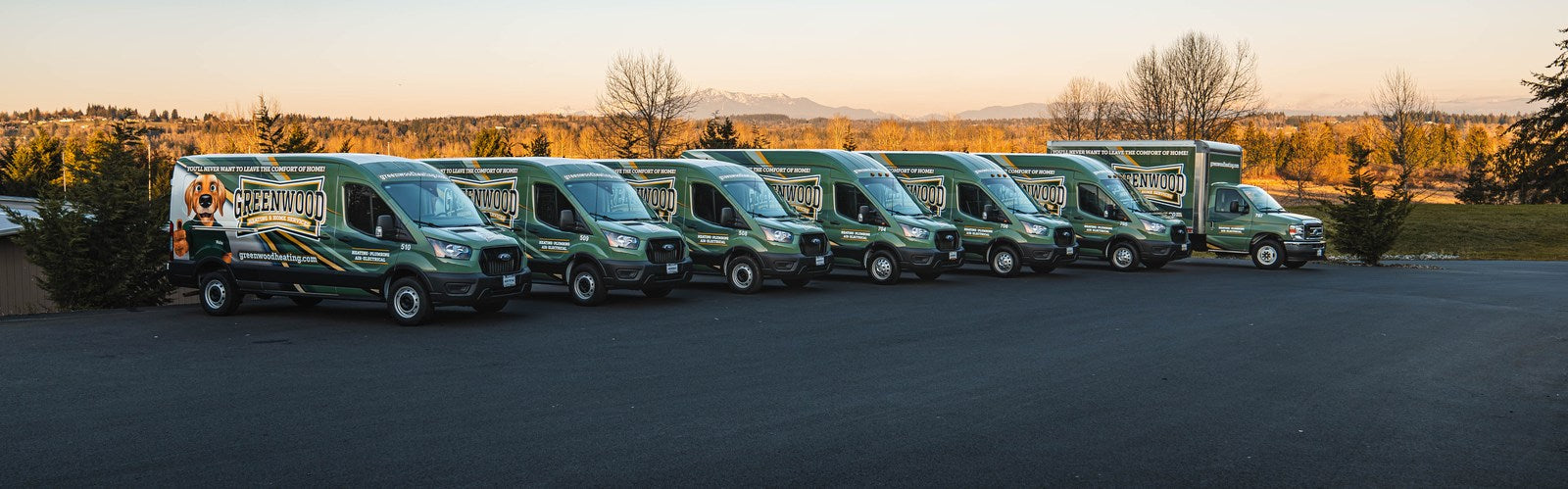
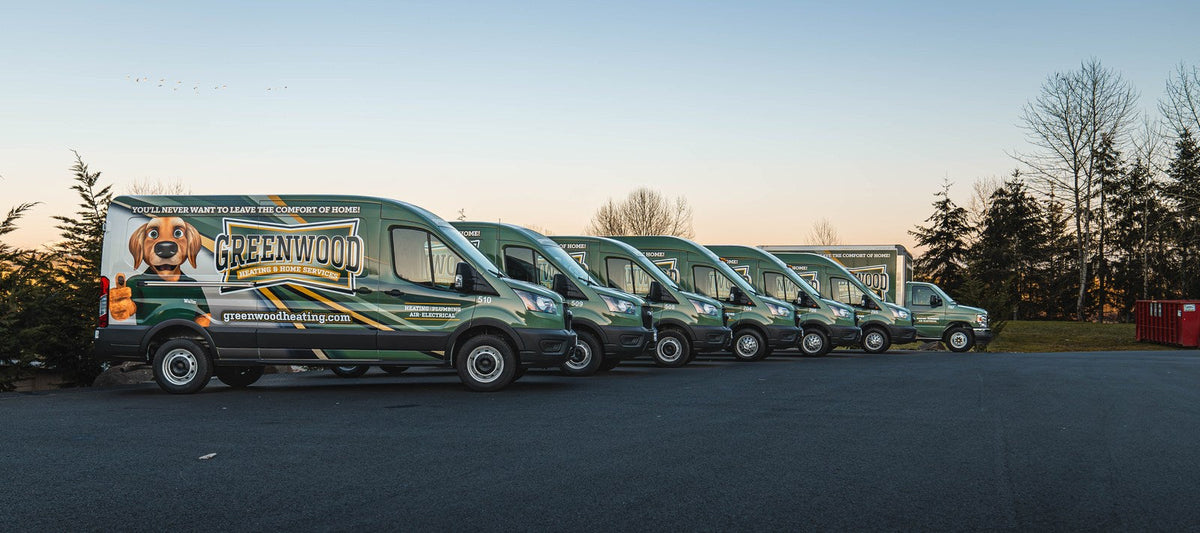
Every van and the box truck in the Greenwood Heating fleet carries the same wrap design, printed and installed by Ardor Printing.
Cost per vehicle depends on coverage, vehicle type and design complexity
Fleet wraps aren't priced like a flat poster, because every vehicle has different curves, panels, doors, trim, windows and usable graphic space. A simple lettering package on a pickup is very different from a full wrap on a high-roof cargo van. The number of vehicles also matters, because fleets benefit from repeatable layouts and production efficiencies once the first design is approved.
Ardor Printing's starting prices:
- Fleet wraps: from $3,500 (typical for partial wraps or large fleets of smaller vehicles like a Ford Maverick; full wraps on vans and trucks usually cost more)
- Van wraps: from $3,900 (see our Sprinter, Transit and ProMaster van wrap guide)
- Truck wraps: from $4,000 (see how much it costs to wrap a truck)
- Box truck wraps: $4,500 to $8,500+ for the sides and rear, priced by box length (see box truck wraps in Seattle)
- Trailer wraps: priced by trailer size and coverage (see our trailer and food truck wrap guide for prices by size)
- Simple door logos (both front doors): from $350, and a door lettering package (logo + phone, website, USDOT) from $495 (see lettering and decals vs. wraps)
- Wrap design: full wrap design from $1,000, partial wrap design from $650. Our in-house designers do wrap design and logo design.
These starting points help with budgeting, but the final quote depends on the scope. A partial wrap with strong logo placement, phone number, website and service list may be enough for some contractors. A full wrap may be the better choice for companies that want maximum color coverage or a more premium, high-impact look across the whole fleet.
What affects the final price?
The biggest pricing factor is coverage. Full fleet wraps use more film, more print time and more installation labor than door graphics or spot lettering. Larger vehicles need more material, and complex body shapes add time because installers have to work carefully around handles, mirrors, bumpers, channels and seams.
Design readiness also plays a role. If your logo files, brand colors, fonts and messaging are already organized, the design phase moves faster. If your company needs help refining the look of the fleet, the design process may include more layout work to create a branded system that works across different vehicle models.
A realistic timeline starts before installation day
A strong wrap timeline is built on preparation. Rushing straight to print without confirming vehicle details can lead to alignment problems, inconsistent placement, or graphics that don't translate well from a van to a truck. The best projects start with clear information: vehicle year, make, model, photos, quantity, preferred coverage, brand assets and the business goals for the wrap.
A typical fleet wrap project includes these stages:
- Project consultation. We learn how many vehicles are involved, where they operate, what services should be promoted, and whether you need wraps, lettering, upfitting or a combination.
- Vehicle review and measurements. Accurate vehicle details let the team build graphics around doors, windows, fuel caps, ladders, racks and body lines.
- Fleet wrap design. Designers create a layout that balances brand recognition, readability and visual impact from real traffic distances.
- Proofing and approval. You review the design, request changes if needed, and approve the final version before production.
- Printing and laminating. Graphics are printed in-house on 3M and Avery Dennison wrap films and laminated for protection.
- Installation. Vehicles are cleaned, prepped, installed, inspected and released back into service.
How long does each stage take?
Design and printing happen before install day, so each vehicle is only out of service for the install. Design and proofing move as fast as artwork and approvals come back, so every quote includes a timeline for your job. Nothing prints until you approve the proof. These are our published install times:
- Vans: a full wrap on a Ford Transit can be installed in as little as 4 hours.
- Most vehicles: installed in a day. Full wraps on larger or more complex vehicles take 1 to 5 days.
- Box trucks: usually one to a few days in the shop, depending on box size and coverage.
- Trailers: most installs take one to three days once the graphics are printed.
- Upfits: most single-van upfits take a few days once the equipment is in stock.
For a whole fleet, we schedule a few vehicles at a time so the rest keep working, and we can put more than one installer on a vehicle to cut downtime. After install, wait 72 hours before the first wash.
A staged rollout: Greenwood Heating, 100+ vehicles in two months
Greenwood Heating, a Seattle heating and home services company, rebranded its fleet with full printed wraps on more than 100 vehicles. We started with a consultation, built several mockups and refined them with Greenwood's feedback until one design was approved. Then we printed every wrap on 3M film and installed on a set schedule. All 100+ vehicles were wrapped within two months, without disrupting Greenwood's daily operations.
For commercial vehicles, downtime is a real business cost. Ardor Printing offers vehicle pick-up and delivery, which helps busy teams in Seattle, Everett, Bellevue and across the Puget Sound that can't easily spare staff for drop-offs and pickups.
Consistent branding is the difference between a wrapped vehicle and a fleet
One wrapped vehicle can advertise a business. A coordinated fleet makes the company look established, organized and easy to recognize. That's why brand consistency should be planned at the beginning, not corrected after several vehicles are already done.
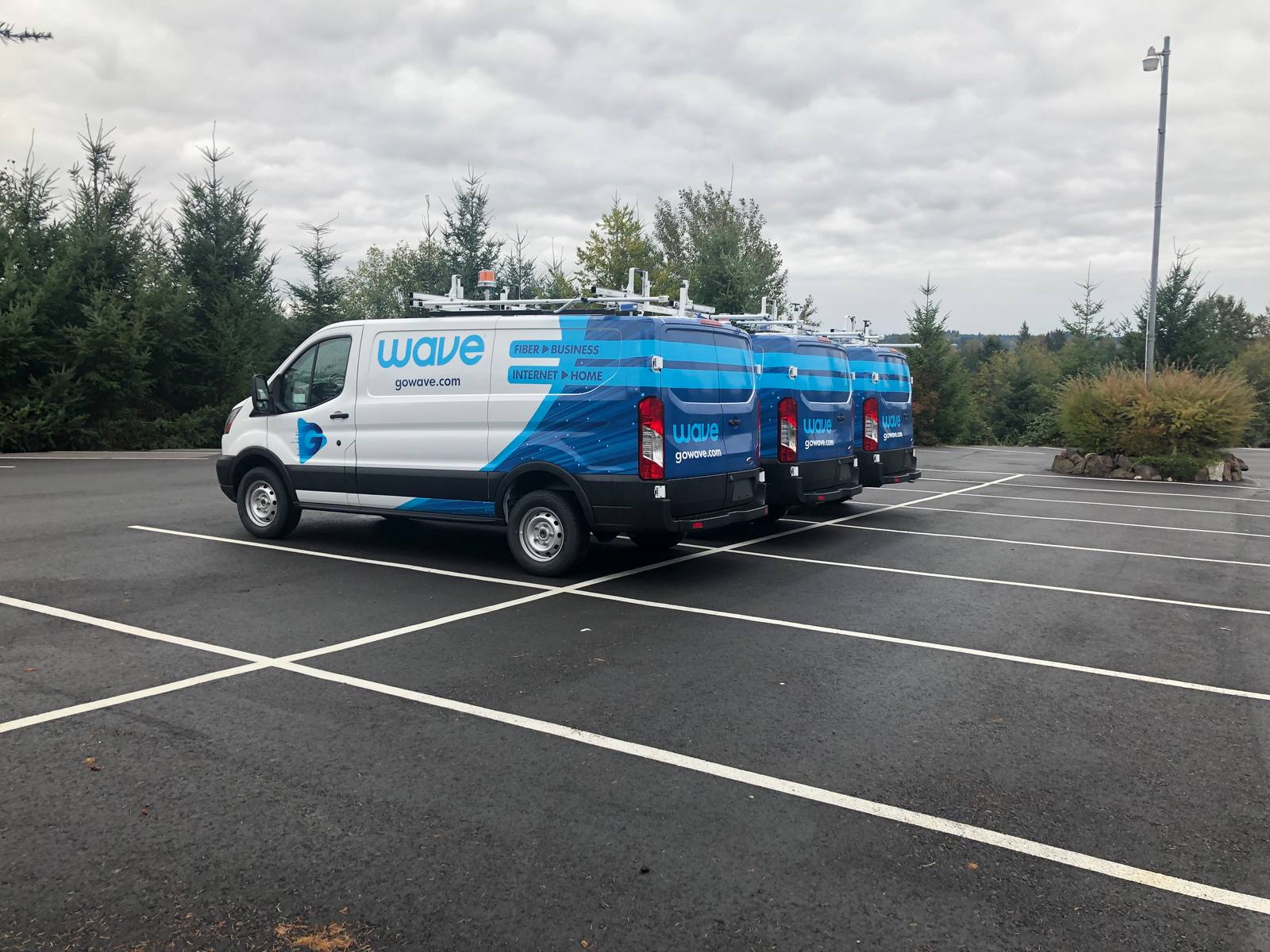
Matching partial wrap graphics on a fleet of Ford Transit vans for Wave, printed and installed by Ardor Printing.
Consistency doesn't mean every vehicle has to look identical in every detail. A compact service vehicle, box truck, cargo van and pickup each have different graphic space. The goal is a flexible system where the important elements stay familiar: logo size, color palette, main message, website, phone number and overall style. The Greenwood Heating fleet rebrand is a good example: vans and a box truck that clearly belong to the same company.
Brand elements to lock in early
Before production begins, define the non-negotiables. These should stay consistent across every vehicle, even when the body style changes.
- Logo use: which logo version appears on light, dark or photo backgrounds.
- Color standards: brand colors that stay consistent across vehicles, print batches and replacement graphics.
- Main message: the one phrase or service category drivers should remember.
- Contact information: one preferred phone number, website or call-to-action format.
- Placement rules: key information in predictable spots when possible, such as doors, rear panels or side panels.
- Legibility standards: no tiny text, crowded service lists or low-contrast colors that disappear in traffic.
Seattle-area vehicle wraps have to work in dense traffic, rain, tight parking and fast-moving roads. A clean design with strong contrast and simple messaging usually performs better than a cluttered design that tries to say everything at once.
How can fleet pricing help growing companies?
Fleet pricing helps growing companies control costs and stay consistent when branding multiple vehicles. Instead of treating every van or truck as a brand-new design project, we create a scalable system and apply it across the fleet. This is especially helpful for businesses that add vehicles over time and want each new one to match.
Ardor Printing offers fleet pricing for contractors, delivery companies, home service businesses, mobile service providers and other organizations with multiple vehicles. A planned fleet program also makes replacements easier: if a vehicle is damaged, sold or added, the approved design guides the next wrap instead of starting from scratch.
Fleet pricing isn't only about the first order. It's also about process. When artwork, materials and installation details are documented, future vehicles move through the shop faster and with fewer design questions.
Upfitting and wraps can be done in one visit
Many commercial vehicles need more than graphics. Vans and trucks may need shelving, racks, storage, partitions or tool organization before they go into daily service. Scheduling the wrap and the upfit separately means extra downtime and repeat trips.
Ardor Printing is an authorized WEATHER GUARD dealer and can upfit vans and trucks in the same visit as the wrap. The vehicle can arrive as a blank work unit and leave road-ready, branded and organized. That's especially helpful when launching new vehicles, replacing older ones, or standardizing a fleet after a period of growth. Our work van and truck upfitting guide covers the options.
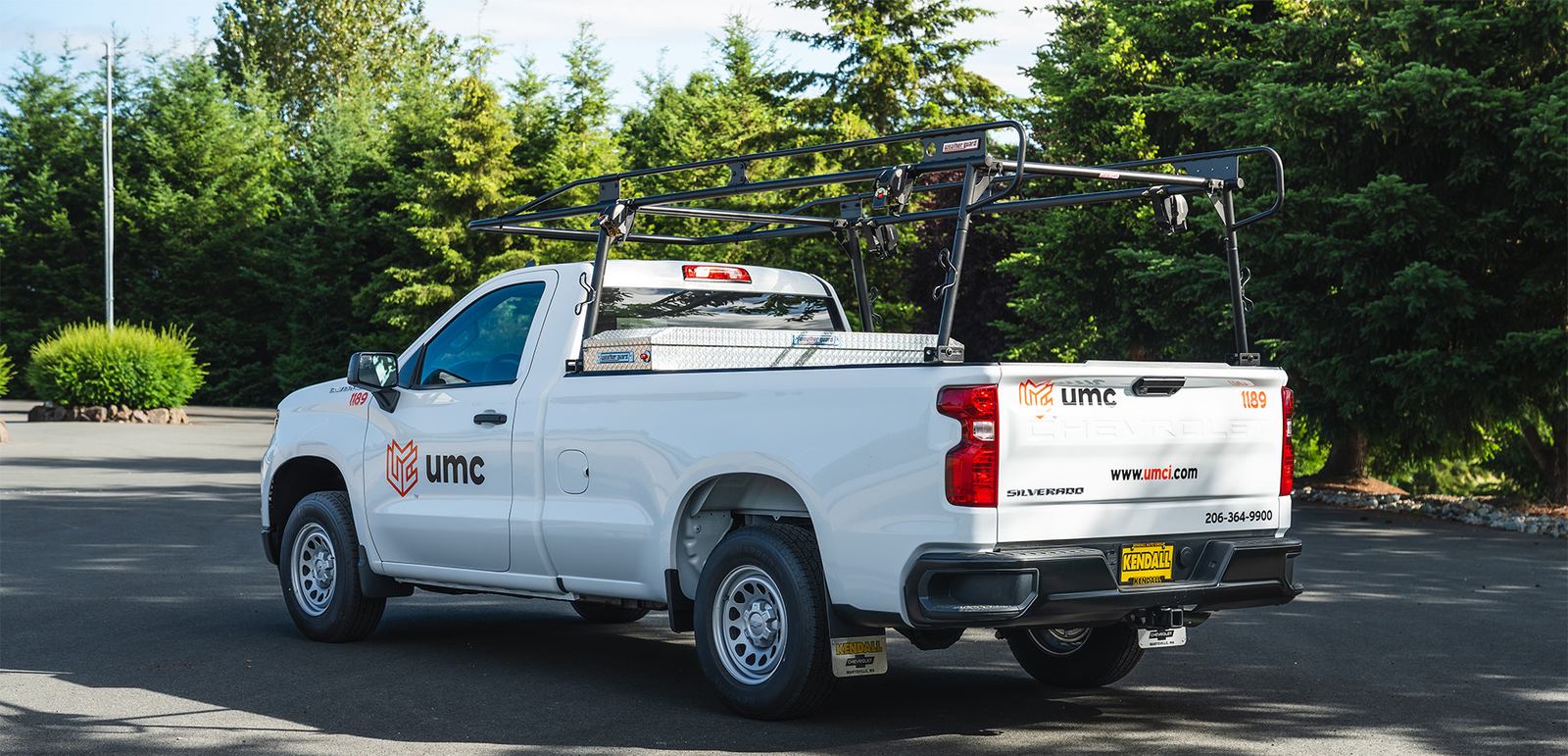
UMC fleet truck lettering plus a ladder rack and crossover toolbox upfit, all completed by Ardor Printing.
Doing both together also helps brand consistency. A ladder rack, shelving system or exterior equipment affects where graphics should go. When the upfit and wrap teams coordinate, the design accounts for the real equipment instead of guessing around it.
Practical tips before requesting a quote
A clear quote starts with clear information. You don't need every detail before contacting a wrap shop, but a little preparation helps us recommend the right scope and timeline.
Before asking for pricing, gather:
- Vehicle year, make, model and quantity
- Photos of each vehicle from several angles
- Notes about damage, rust, decals or previous wraps
- Your logo files, brand colors and existing marketing materials
- Preferred coverage: lettering, partial wrap, full wrap or custom fleet graphics
- Must-have information such as phone number, website, service area and license numbers if applicable
- Any upfitting needs, including WEATHER GUARD equipment, racks or storage
- Your schedule and any deadlines tied to launches, hiring, events or busy seasons
It also helps to think about your audience. A plumbing company, caterer, HVAC contractor, delivery service and property maintenance team all need different messaging. The best fleet wraps focus on what people can understand quickly: who you are, what you do and how to reach you.
A well-planned fleet wrap keeps working after installation
Commercial fleet wraps are long-term brand assets. Once your vehicles are wrapped, keep the brand system organized so future updates are easy: save the approved artwork, note material choices, and keep records for each vehicle.
Printed wraps last up to 8 years on vertical surfaces like doors and sides, and about 3 years on hoods and roofs, which get more sun. Every install has a 1-year installation warranty.
Care matters too. Regular hand washing, avoiding harsh cleaners and fixing damage early keep the fleet looking professional (see how long a wrap lasts in the Pacific Northwest). If one vehicle looks faded, damaged or off-brand next to the rest, customers notice. A consistent fleet sends a stronger message: your business is active, prepared and pays attention to details.
Fleet wraps are one of the most visible branding choices a local business can make. With the right design, materials, installation and scheduling plan, your vehicles look unified whether they're parked at a jobsite in Bellevue, driving through Seattle or serving customers in Everett.
Frequently asked questions about fleet wraps
How much do fleet wraps cost?
At Ardor Printing, fleet wraps start from $3,500 for partial wraps or large fleets of smaller vehicles like a Ford Maverick, van wraps from $3,900 and truck wraps from $4,000. Full wraps on vans and trucks usually cost more than the fleet starting price. Simple door logos (both front doors) start at $350. The final price depends on vehicle size, coverage and design work, and fleet pricing is available when you brand multiple vehicles.
Ask us for fleet pricing, or see our fleet vehicle wraps page.Should every vehicle in a fleet look exactly the same?
Not exactly. Vans, pickups and box trucks have different shapes, so the goal is a consistent system: the same logo, colors, main message and contact details in predictable spots, adapted to each vehicle.
Can you wrap and upfit a work van in the same visit?
Yes. Ardor Printing is an authorized WEATHER GUARD dealer and can install shelving, ladder racks and storage in the same visit as the wrap, so the vehicle is only out of service once.
Is it cheaper to letter fleet vehicles instead of wrapping them?
Usually, yes. Simple door logos on both front doors start at $350, and a door lettering package with your logo, phone, website and USDOT number starts at $495. Both work well for basic identification. A partial or full wrap costs more but gives much stronger visibility.
How long does it take to wrap a fleet?
It depends on how many vehicles you have and how much coverage each one gets. Design and printing happen before install day. A full wrap on a Ford Transit can be installed in as little as 4 hours, and larger vehicles or full coverage take one to a few days each. We install in batches so most of your fleet stays on the road. On the Greenwood Heating rebrand we wrapped 100+ vehicles in two months.
Get a fleet wrap quote
Ready to plan your fleet wrap, lettering or upfit? Request a free quote or call (425) 629-0796 to talk with Ardor Printing about your vehicles, timeline and branding goals. See examples and options on our fleet vehicle wraps page, or try the fleet wrap ROI calculator to estimate your investment and impressions.
About the author: Dayne Remlinger founded Ardor Printing in 2012. His team has completed more than 25,000 projects from its shop at 12531 Old Snohomish Monroe Rd, Snohomish, WA 98290.
Ready to talk about your project?
Ardor Printing designs, prints and installs vehicle wraps, signs and wall graphics in-house in Snohomish, WA, for businesses from Everett to Seattle.
More Wrap Costs & Pricing guides
See all →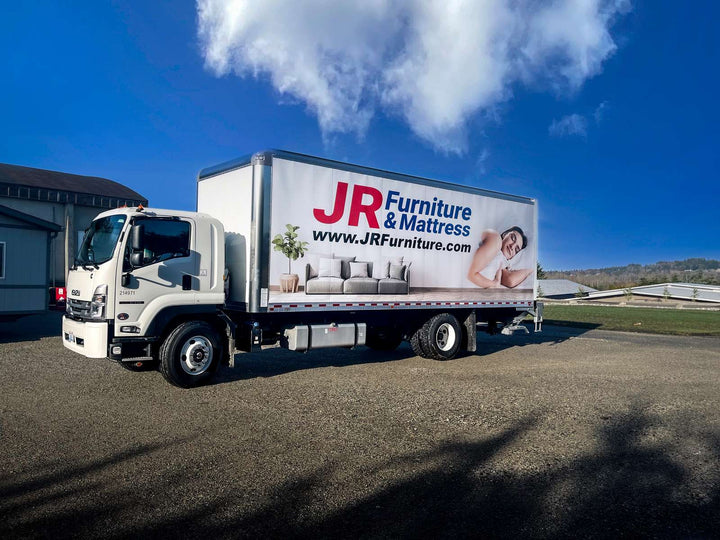
How Much Does It Cost to Wrap a Box Truck? Prices by Size, Design Tips and Lifespan
Box truck wraps cost $4,500 to $8,500+ for the sides and rear. See full-wrap prices for 12 to 26 ft boxes, design tips that...
Office Window Tinting: Film Types and Commercial Window Tinting Cost
Office window tinting cuts heat, glare and UV. See commercial window film types, typical cost per square foot and what changes your price.
Car Wrap Removal: Cost, Process and When It's Time to Remove or Replace Your Wrap
When a wrap is faded, cracking or it's time to rebrand, here's what removal costs, how professionals take a wrap off without damaging paint,...
Questions or comments?