
Outdoor Business Signs: Types, Materials and What Lasts in Pacific Northwest Weather
On this page
Quick answer: In Pacific Northwest weather, a coroplast yard sign typically lasts 1 to 2 years outdoors, cut vinyl lettering often lasts 5 years or more, and ACM (aluminum composite) is the choice for permanent building and post and panel signs. Ardor Printing makes custom business signs in Snohomish, WA. A-frame signs start from $239.46 when you design them online, 13 oz vinyl banners start from $60, and building, post and panel and other custom signs are quoted by size and material. Use vinyl banners for promotions and mesh banners for windy spots, keep road-facing signs simple and high-contrast, and check landlord rules and city permits before production. In Seattle, a sign larger than 5 square feet or connected to electrical power needs a city permit.
Key takeaways
- Match the material to the lifespan: ACM for long-term, coroplast and banners for short-term.
- Rain, UV and wind each attack a sign differently. Edges, laminate and mounting all matter.
- Design for a driver's glance: business name, service and one action, in high contrast.
- Signs work best as a system: building sign, window graphics, sidewalk sign and vehicles.
- Check lease rules and permits before a permanent sign goes into production.
Good outdoor signs help customers find you, understand what you offer and remember your brand. Ardor Printing is a vehicle wrap, sign and fleet upfitting shop in Snohomish, WA, serving Seattle, Everett, Bellevue and the Puget Sound since 2012. We design, print and install in-house with 3M and Avery Dennison films, and we've seen how signs hold up on rainy storefronts, busy roads and job sites across the region.
What makes outdoor signs last in the Pacific Northwest?
Outdoor signs last when the design, material, print method, laminate and mounting are all chosen for rain, UV, wind and real-world visibility. A sign that works in a dry, calm climate may not be right for a Seattle storefront or a roadside location in Everett.
The Northwest is hard on signs: moisture is constant, wind stresses panels and banners, and gray days reduce contrast from the road. Materials need to resist swelling, peeling, fading and edge damage. Installation matters just as much. Even strong materials fail early if they're mounted poorly, placed in a wind tunnel or attached to a surface that won't hold fasteners or adhesive.
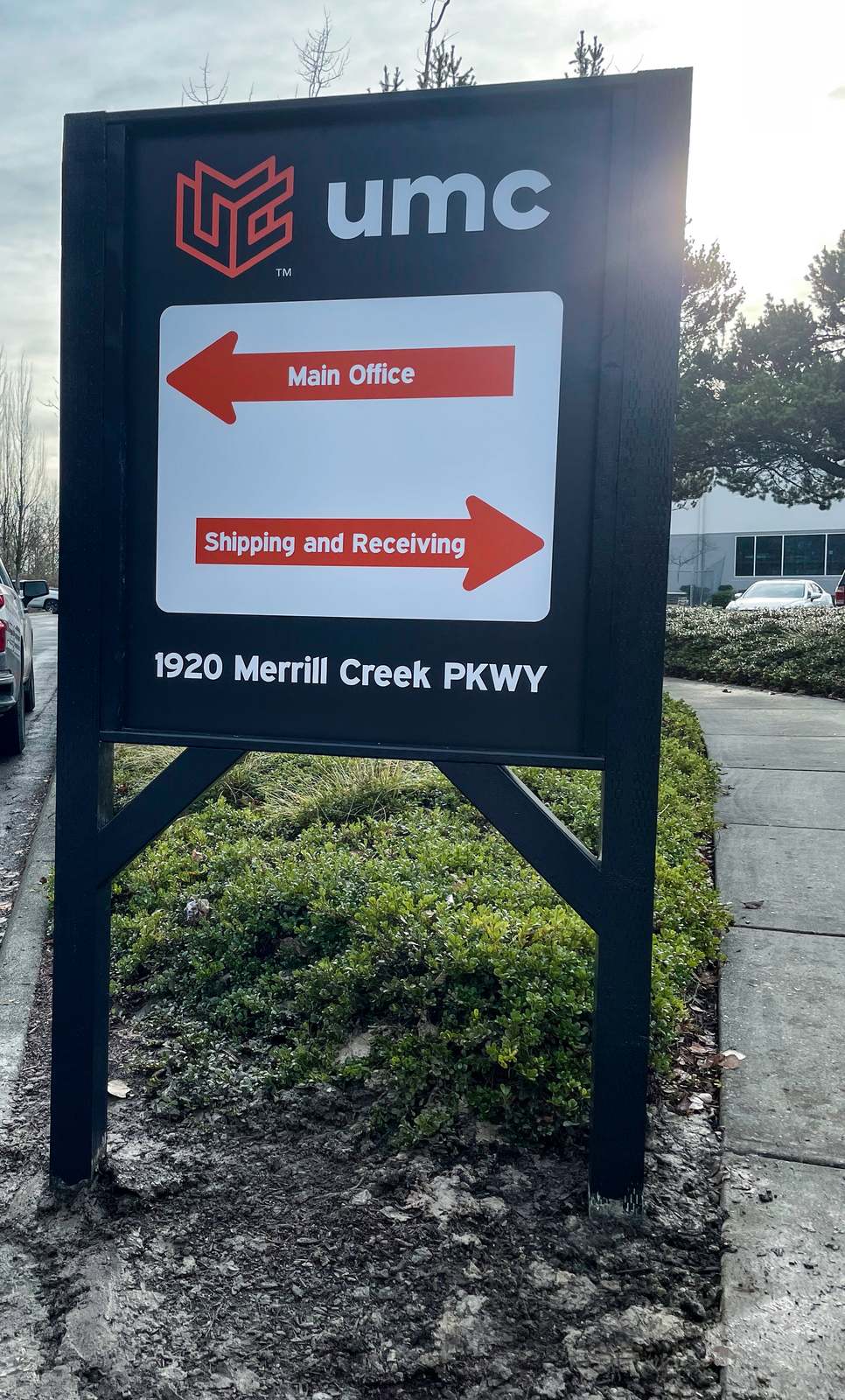
Post-and-panel wayfinding sign at UMC's Everett location, made by Ardor Printing.
Outdoor sign types for different business goals
A storefront needs to be easy to identify. A contractor needs visibility at job sites. A retail shop may want a sidewalk sign it can move every day. A service company may want its vehicles to advertise on every route.
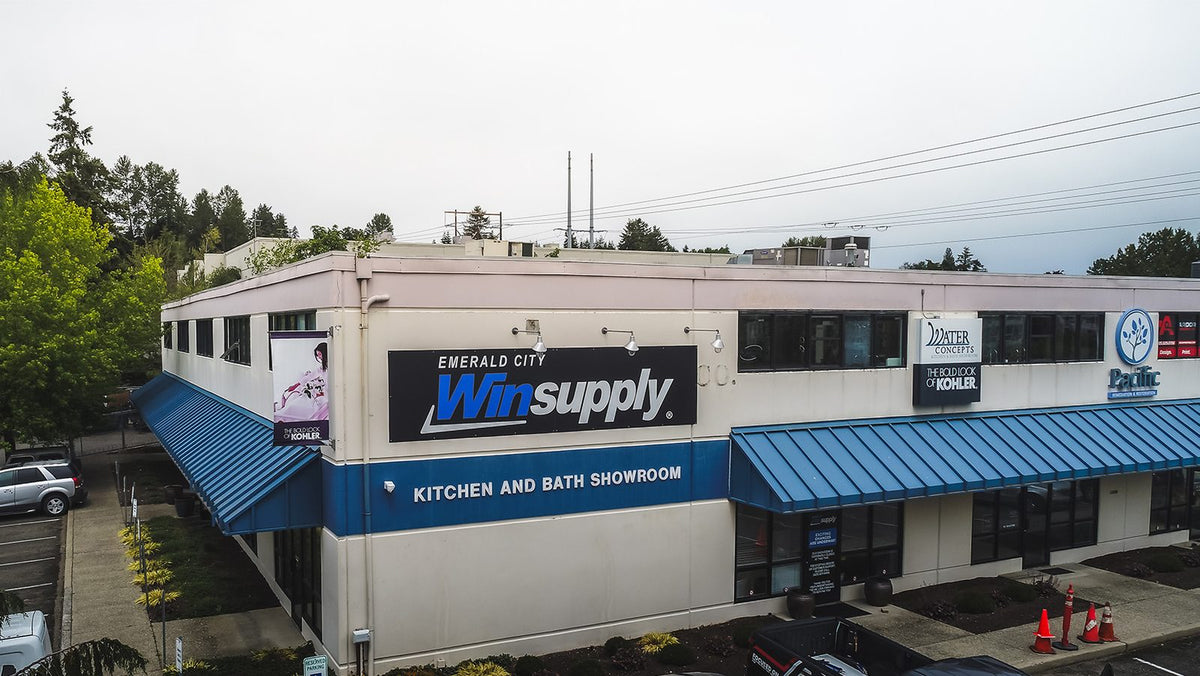
- Building and wall panel signs: a fixed, branded presence for storefronts, offices, warehouses and apartment buildings, designed to read from the parking lot and the road.
- Post and panel signs: for entrances, directions, parking areas and businesses set back from the street. Keep the panel simple enough to read before a driver passes the driveway.
- Tenant panels: printed panels for shared roadside pylon signs in retail centers and business parks.
- A-frame sidewalk signs: for cafés, shops, salons and studios with walk-by traffic. You can design an A-frame sign online from $239.46. See our A-frame signs page for sizes and frame options.
- Coroplast yard signs: light and affordable for real estate, events, contractors and short campaigns. See our coroplast signs guide.
- Vinyl banners: bold and flexible for sales, openings, events and fences, from $60 for 13 oz custom banners.
- Mesh banners: for fences and exposed spots where wind needs to pass through.
- Window graphics: turn storefront glass into branding, hours and promotions.
- Vehicle graphics: mobile signs that carry your brand across the Puget Sound every day.
The best results come from signs that work together: a clear building sign, window graphics at the entrance, banners for promotions and lettered vehicles in the lot.
Materials that hold up outdoors
There's no single best material. Match it to the location, lifespan, weather exposure and mounting.
| Material | Best for | Notes |
|---|---|---|
| ACM (aluminum composite) | Building, wall and post and panel signs | Rigid, flat and weather resistant. Our most popular material for permanent outdoor signs. |
| Coroplast | Temporary yard, event and job-site signs | Light, low cost and easy to place. Typically lasts 1 to 2 years outdoors, less in direct sun and full weather |
| Vinyl | Banners, window graphics, decals and vehicle graphics | Full-color and versatile; laminate adds protection. Cut vinyl lettering often lasts 5 years or more |
| Mesh | Fence and exposed banners | Lets wind through to reduce stress on the banner and mounts |
Laminate is the unsung hero. On printed vinyl, it protects against scuffs, moisture and UV fading, and it sets the final gloss or matte finish. Switch from a vinyl banner to a mesh banner when the spot is a fence or an open wall that takes steady wind.
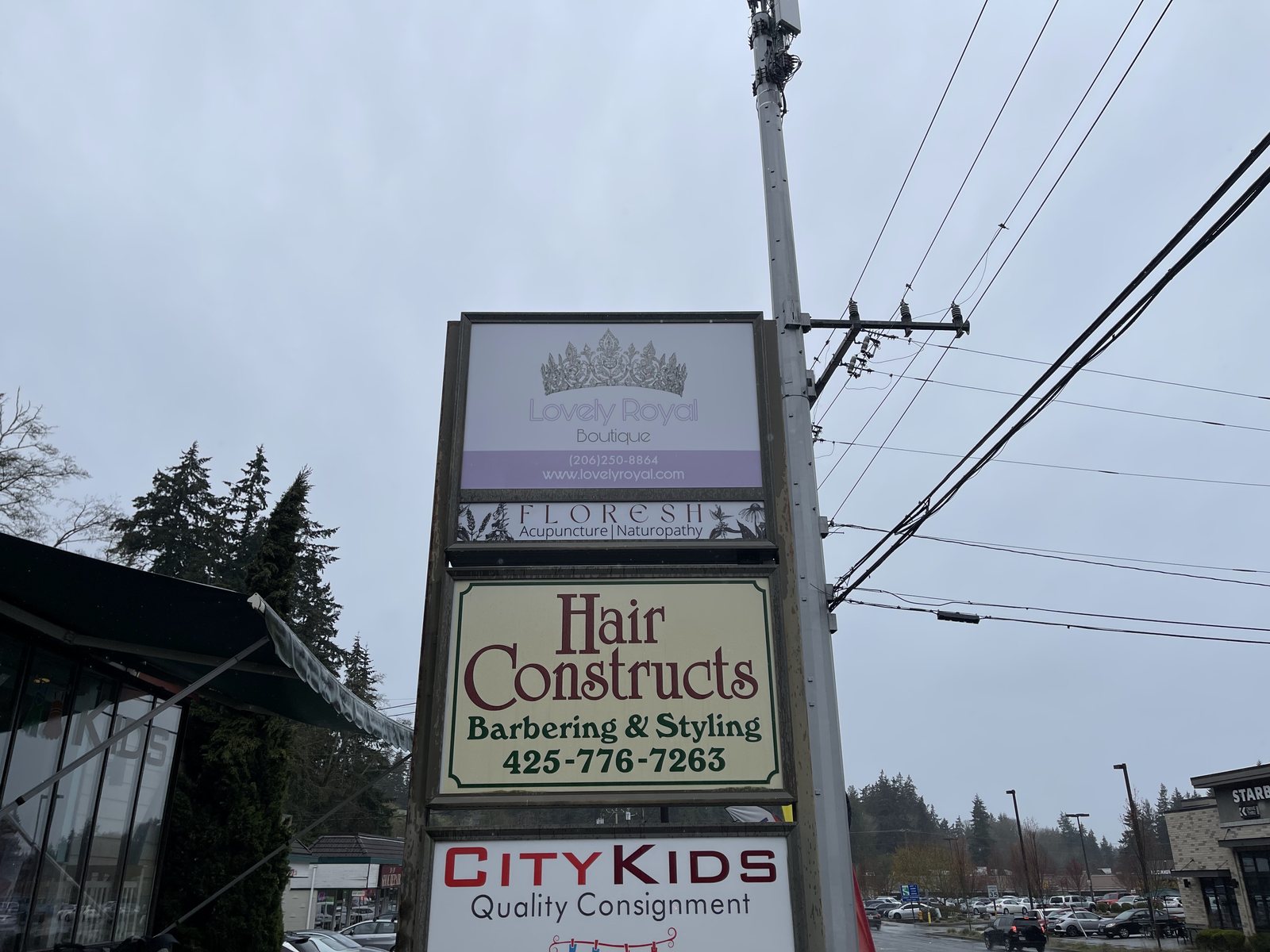
Pylon sign tenant panels in Edmonds, WA, including the Lovely Royal Boutique panel produced by Ardor Printing.
Design for real viewing distance
A beautifully designed sign still fails if people can't read it quickly. A driver passing a storefront has a moment to recognize the business, while a pedestrian can take in more detail. For road-facing signs, lead with the business name, core service and logo, plus one action if needed. Thin fonts, low contrast and crowded layouts disappear in rain, shade and traffic.
- Lead with the most important message.
- Use strong contrast: dark on light or light on dark.
- Limit small text so phone numbers and taglines don't compete.
- Consider the approach angle: sidewalk signs and road signs need different layouts.
- Leave white space, especially for gray, wet days.
Because Ardor designs, prints and installs, we design for the actual location, not just the screen, and you approve a proof before anything prints.
How rain, sun and wind affect outdoor signs
Each one attacks a different part of the sign:
- Rain works into edges and mounting points. Panels should be properly finished, banners secured so water doesn't pool, and window and vehicle film applied to clean, dry surfaces.
- Sun fades prints over time, even in a cloudy region. Outdoor-rated inks, film and laminate slow fading.
- Wind pulls on panels, banners, frames and fasteners. Mesh banners let air through; vinyl banners need the right grommets, spacing and tie-downs; rigid signs need hardware that suits the wall or posts.
How long each one lasts here: coroplast yard signs typically last 1 to 2 years outdoors, and less in direct sun and full weather. Cut vinyl lettering and spot graphics often last 5 years or more. Printed vinyl graphics on vehicles last up to 8 years on vertical surfaces and about 3 years on hoods and roofs, where the sun hits hardest. ACM is the material we use for signs that need to stay up long-term. Our materials and durability page lists every product.
The goal is a sign that still looks good after several Northwest winters, not just on install day.
Match the sign to how your business works
A busy retail shop may need window graphics, an A-frame and a wall panel. A contractor may get more from lettered trucks, yard signs and job-site banners. A professional office may want one clean ACM panel. Three questions narrow it down:
- Is it temporary, seasonal or long-term? Banners and coroplast for short-term; ACM or installed window graphics for long-term.
- Will people see it walking or driving? Road signs need fewer words and bigger elements.
- Will it face wind, rain or handling? Portable signs, banners and exposed panels need the right material and mounting.
Vehicle graphics deserve a mention here too. A lettered van or wrapped truck shows your logo, services and phone number across several cities in a day. See our post on vehicle lettering vs. wraps and our fleet wraps guide.
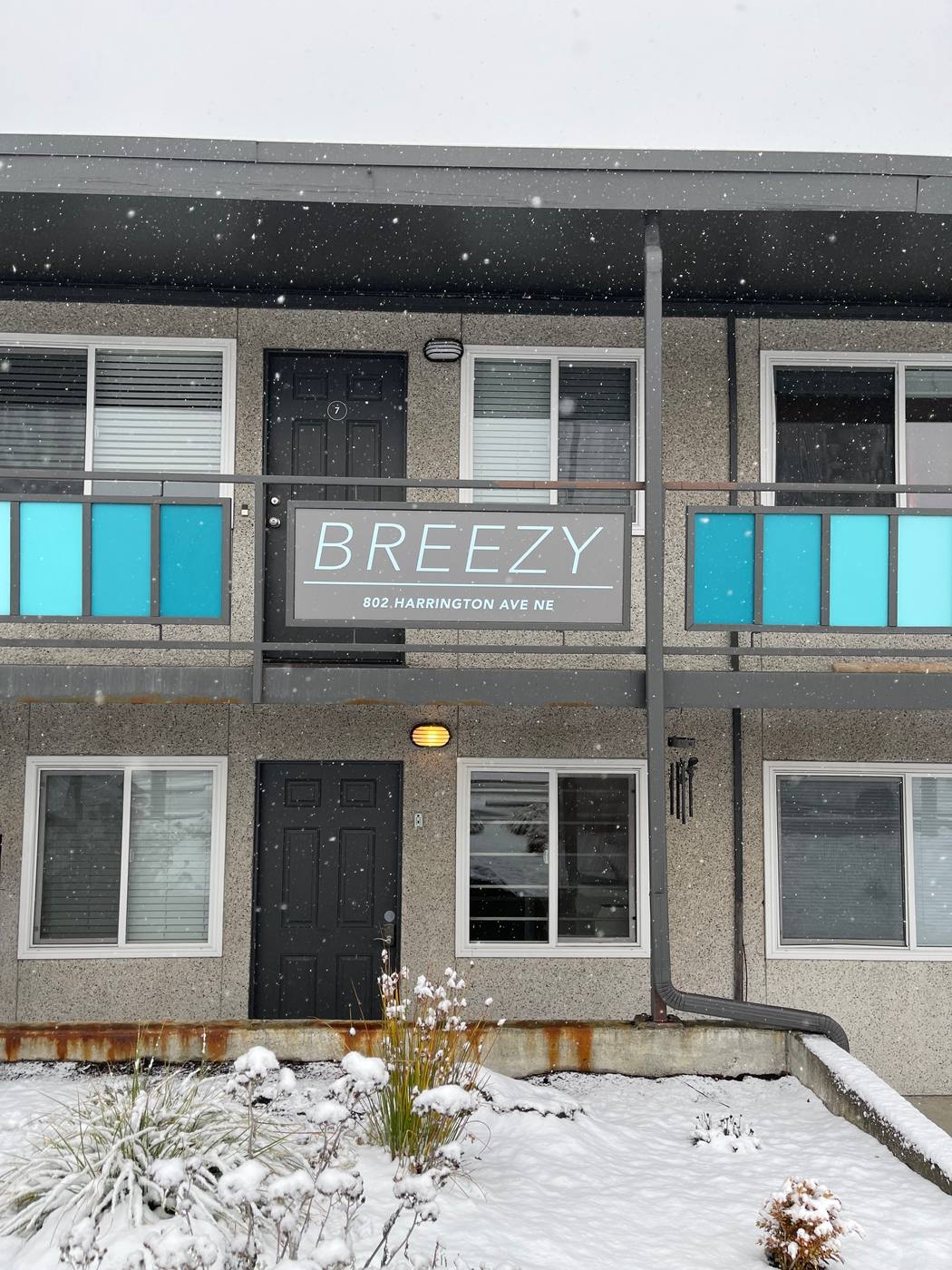
Exterior building sign for the Breezy apartments in Renton, WA, made by Ardor Printing.
Permits, landlord rules and site restrictions
Before producing an exterior sign, check the rules for your location. Many commercial leases set requirements for sign size, placement, colors, mounting and approved sign types, and shared retail centers and office parks often have written sign criteria. Cities set their own permit rules too. This is what Seattle, Bellevue and Everett say on their own pages (checked October 2026):
- Seattle: the Seattle Department of Construction and Inspections (SDCI) requires a sign permit for any sign larger than 5 square feet or connected to electrical power. If the sign extends over a sidewalk, street or alley, you may need a street use permit from the Seattle Department of Transportation first. Signs in a historic or special review district need a certificate of approval from the Department of Neighborhoods first. SDCI says it can usually issue the permit in about one week when the application is complete.
- Bellevue: the city's sign permits page says a sign permit is required for every sign that is erected, altered or relocated, and that building review may be required for certain permanent commercial signs. You apply online through MyBuildingPermit. The city also notes that new sign code regulations take effect Feb. 1, 2027, so check which rules apply on your install date.
- Everett: under Everett Municipal Code 19.36.020, no sign can be erected, re-erected, attached, structurally altered or relocated without a city sign permit. The exceptions include portable signs that meet the code. Everett Permit Services' sign permit checklist asks for a site plan and construction plans, and illuminated signs need a separate electrical permit.
Rules change, so confirm with the city before you order.
It's easy to overlook while you're focused on design, but it saves time and money. A sign that looks great in a mockup still has to fit the property rules, and those limits can decide whether a wall panel, post and panel sign, window graphic or banner is the better choice. Ask for the sign criteria before you finalize the design. Our how we work page covers the site visit, proof and install steps.
A practical way to choose your next sign
Start with the purpose, not the product:
- Audience: drivers, pedestrians, tenants, event visitors or job-site traffic.
- Message: business name, service, promotion, direction or contact info.
- Lifespan: short-term, seasonal or long-term.
- Environment: rain, sun, wind, mounting surface and handling.
- Restrictions: landlord rules, property standards and permits.
- Readability: strong contrast, simple hierarchy, the right size.
- Material: ACM, coroplast, vinyl, mesh or a mix.
- Installation: adhesive, hardware, posts, frames or grommets.
Frequently asked questions about outdoor business signs
What is the best material for an outdoor business sign?
For permanent signs, ACM (aluminum composite) is a common choice because it's rigid, weather-resistant and looks professional. Coroplast and vinyl banners suit temporary signs, and mesh banners suit windy locations.
How long do outdoor signs last in the Pacific Northwest?
Coroplast yard signs typically last 1 to 2 years outdoors, and less in direct sun and full weather. Cut vinyl lettering often lasts 5 years or more. ACM signs with outdoor-rated, laminated graphics are built for long-term use, and banners are meant for shorter-term use. Material, laminate, sun exposure and mounting all change the result.
Do I need a permit for an outdoor business sign?
Usually, yes. Seattle requires a permit for any sign larger than 5 square feet or connected to electrical power. Bellevue requires a sign permit for every sign that is erected, altered or relocated. Everett requires one before a sign is erected, altered or relocated, with exceptions that include portable signs that meet its code. Leased properties often have their own sign rules, so check with your city and landlord before production.
How much does an outdoor business sign cost?
A-frame signs start from $239.46 when you design them online, and 13 oz vinyl banners start from $60. Building, post and panel and other custom signs are quoted by size, material and installation.
Who makes outdoor business signs near Seattle?
Ardor Printing designs, prints and installs outdoor business signs for companies across Seattle, Bellevue, Everett, Lynnwood and the Puget Sound. Our sign shop is in Snohomish, WA, where we print in-house on UV flatbed printers and install with our own crew, including lift work for higher walls. Quotes are free.
Plan your outdoor sign with a local team
Effective outdoor signs are designed for their location, made from the right materials, installed correctly and readable in real weather. Ardor Printing makes signs for businesses in Seattle, Everett, Edmonds, Renton, Bellevue, Snohomish and across the Puget Sound.
Ready to plan your exterior sign? Request a free quote or call (425) 629-0796.
About the author: Dayne Remlinger founded Ardor Printing in 2012. His team has completed more than 25,000 projects from its shop at 12531 Old Snohomish Monroe Rd, Snohomish, WA 98290.
Ready to talk about your project?
Ardor Printing designs, prints and installs vehicle wraps, signs and wall graphics in-house in Snohomish, WA, for businesses from Everett to Seattle.
More Signs, Banners & Events guides
See all →
Mesh Banner vs. Vinyl Banner: Which One Do You Need?
Mesh banners let wind pass through, while vinyl banners show brighter color. Compare uses, finishing, Northwest wind and rain tips and prices by size.
Kiss Cut vs Die Cut Stickers: Differences and Uses
Kiss cut stickers are cut through the top layer only, while die cut stickers are cut through the backing paper too. Here's how to...
Office Window Tinting: Film Types and Commercial Window Tinting Cost
Office window tinting cuts heat, glare and UV. See commercial window film types, typical cost per square foot and what changes your price.
Questions or comments?